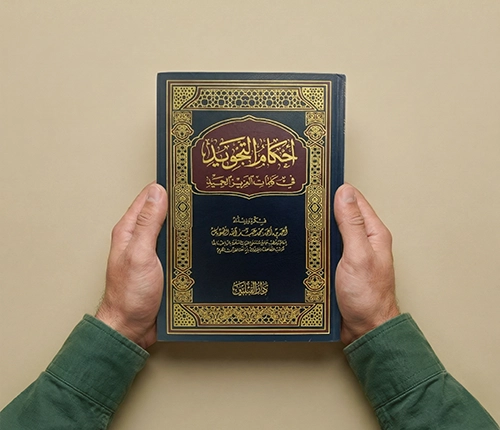
Advanced Tajweed Course Online

Advanced Tajweed Course Online
About the Course
The Advanced learn quran tajweed online Course offered by Josoor al Quran Academy is aimed for those students who already possess a strong grasp of Tajweed and are prepared to make the recitation of the Quran a scholarly and accurate level. Among others, this course is focused on mastering the pronunciation rules, advanced letter relationships, and accurate stopping and starting during recitation, all of which are the skills that separate the fluent reciters from the truly proficient ones.
With the help of a structured Quran Tajweed online course, the students will be able to come to a better understanding of the complex tajweed rules while at the same time applying them directly to the readings of the Quran with the help of a qualified tajweed teacher online. Theory and intensive practical application are combined in the course to ensure the participants’ accuracy, confidence, and consistency in recitation.
Whether your aim is to acquire proficiency in Quran recitation, train to be a future Tajweed teacher, or get ready for Ijazah-level studies, this course will equip you with the advanced knowledge needed in order to recite the Book of Allah just the way it was revealed.
Course Curriculum
This advanced-level curriculum has been carefully structured to address common challenges faced by students who wish to learn Quran Tajweed online at a deeper level. Each topic is explained academically yet clearly, with continuous recitation practice and correction.
At this level, the student learns:
How sound is produced and the method of its articulation.
Explanation of definitions related to Makharij al-Huruf (articulation points of letters).
Makhraj of the hollow/throat cavity (al-Jawf), its letters, and common mistakes in recitation.
Makhraj of the throat (al-Halq), its letters, and common mistakes in recitation.
Makhraj of the tongue (al-Lisan), positions of tongue articulation points, its letters, and common mistakes in recitation.
Makhraj of the edge of the tongue, positions of articulation, its letters, and common mistakes in recitation.
Makhraj of the tip of the tongue, positions of articulation, its letters, and common mistakes in recitation.
Makhraj of the lips (al-Shafatayn), its letters, and common mistakes in recitation.
Makhraj of the nasal cavity (al-Khayshum), its letters, and common mistakes in recitation.
Sifaat al-Huruf (characteristics of letters), their definition, and categories.
Characteristics that have opposites, which are: (Hams/ Jahr – whisper/voiced), (Shiddah, mutawassit or bayniyyah, Rakhawah – strength, medium, softness), (Istila’, Istifal – elevation/flattening), (Itbaq, Infitah – closure/opening), (Idlaq, Ismat – slippage/firmness).
Characteristics that have no opposites, which are: Qalqalah (with common recitation errors), Safir (whistling), Leen (softness), Inhiraf (deviation), Takrar (repetition), Tafashshī (spreading), Istitalah (lengthening), Khafā’ (concealment), and Ghunna (nasalization) and its levels.
Characteristics in terms of strength and weakness.
Definition of Hamzat al-Wasl and Hamzat al-Qat‘, and the difference between them.
Meeting of Hamzat al-Wasl and Hamzat al-Qat‘.
Relationships between Arabic letters: identical letters, their categories and definitions (Ishmam and Rūm).
Definition of similarity (Tajānus) and its types.
Definition of closeness (Taqārub) and its types.
Definition of separation (Tabā‘ud) and its types.
Rule of the meeting of two sukun letters (Ittilāq al-Sākinayn) and its types.
Definition of Hā’ al-Kināyah (special ‘h’ letter) and its types.
Positions of omission and inclusion of the alif.
Definition of Waqf (stopping) and Ibtidā’ (beginning), their signs, and meanings.
Definition of compulsory stop (Waqf Iḍṭirārī) and test stop (Waqf Ikhtibārī), with the signs and meanings of each.
Definition of anticipatory stop (Waqf Intiẓārī) and optional stop (Waqf Ikhtiyārī), with the signs and meanings of each.
Good stop (Waqf al-Ḥasan) and bad stop (Waqf al-Qabīḥ), with the signs and meanings of each.
Definition of pause (Sakt) and cut (Qat‘), and the difference between them.
Qualified Tajweed Teachers Online: Learn from experienced instructors trained in Quranic sciences and advanced Tajweed.
Structured and Scholarly Curriculum: Designed to build deep understanding, not just memorization of rules.
Practical Application-Focused: Every rule is applied directly to Quranic verses with live correction.
Flexible Quran Tajweed Online Classes: Learn from anywhere with a structured online learning environment.
Supportive Learning Atmosphere: Academic yet friendly teaching style that encourages questions and improvement.
Josoor al Quran Academy understands the frustration many students face when they know the rules but struggle to apply them correctly. This course bridges that gap.
Students who have completed basic and intermediate Tajweed.
Quran reciters seeking higher accuracy.
Aspiring Tajweed teachers.
Adults who want to perfect their Quran recitation.
Anyone serious about learning advanced Tajweed correctly.